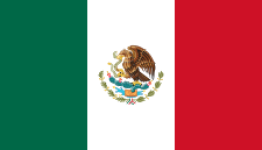

The Mexican National Team is already planning ahead: after proving itself as one of the standout hosts of the 2026 FIFA World Cup, Mexico now sets its sights on 2038. On Tuesday, FIFA released the official requirements for any country - or group of nations - bidding to host the expanded 48-team tournament, and Mexico is emerging as a frontrunner alongside the United States and Central America.
Why Mexico could host the 2038 World Cup
Mexico has already proven its hosting credentials by co-hosting the 2026 World Cup, where the Tri delivered a historic TV audience: the clash against England drew 105 million viewers across Mexico and the U.S., the most-watched match of the 21st century in Mexico with 60 million viewers. This record strengthens Mexico’s bid, which could be presented in partnership with other Concacaf nations to meet FIFA’s standards.
Concacaf already has rotation experience: after 1970, 1986 and 2026, the 2038 World Cup would return to the region, something FIFA values for balanced continental distribution. Plus, the move to 48 teams means matches will be spread across multiple host cities, giving Mexico an edge thanks to its airport and hotel infrastructure in hubs like Mexico City, Guadalajara and Monterrey.
FIFA’s requirements Mexico must meet
FIFA demands sustainable airports, 100,000 hotel rooms, enhanced security and efficient transport for an event of this scale. Mexico already boasts stadiums like the Azteca, Akron and BBVA, but will need to modernize venues such as Cuauhtémoc (Puebla) or Jalisco (Guadalajara) to meet FIFA’s standards.
Another critical point is ticketing logistics and connectivity, since the tournament will be played across multiple countries at once. The Mexican bid, led by the FMF, will work on a joint project with the U.S. and Central America to submit a strong proposal. As the national team noted on July 8, 2026, the process requires continuity and long-term vision.
Who else could challenge Mexico?
FIFA has already assigned the 2030 World Cup (Spain, Portugal, Morocco with games in Uruguay, Argentina and Paraguay) and the 2034 World Cup (Saudi Arabia), so Concacaf and OFC (Oceania) are the only confederations without a confirmed host. That leaves the door open for Mexico, Canada and the U.S. to team up again, or even include nations like Costa Rica or Panama to strengthen the bid.
The road to 2038: stadiums and projection
To rise to the challenge, the FMF is already crafting a master plan that includes upgrades to key stadiums and temporary infrastructure. The Azteca Stadium, with a capacity of 87,000, will remain the heart of the project, but improvements are being evaluated for venues like Nemesis Díez (Toluca) or Corregidora (Querétaro).
The Mexican National Team wrapped up its 2026 World Cup run with a perfect 3 wins, 0 draws and 0 losses in the group stage, though it fell 2-3 to England on July 6, 2026 in a match watched by 45 million in the U.S., an all-time record for a soccer game in the country. With 6 goals scored and 0 conceded, El Tri topped its group with 9 points, 5 clear of South Africa, and is now looking ahead to a future where it could once again be a global host.